When learning a foreign language, like French, should you stick to clean, textbooks French, playing by the official rules, or should you also learn its wrong usages, like incorrect use of some words or expressions that became common, new buzz words, swearing,…?
Even if you learned French at school, had great grades and were able to discuss easily with your French tutor, there’s a chance you might still be at loss when trying to communicate with French speakers in casual contexts, or to understand original French media.
Different types of language in French
In modern French, there isn’t a huge difference between polite language (“vous”) and colloquial language (“tu”), compared to some other languages.
At school, you probably learned that you say “vous” to older or unknown people, to people higher in the hierarchy, and to colleagues, while you say “tu” to friends and close family. That’s not totally true anymore, as less and less people expect to be called “vous” nowadays. Even with colleagues, or the staff of some stores or cafes, it’s become usual to use “tu“.
However, French language types are not only “tu” vs “vous“. There’s a difference between clean, official French, taught at school or in textbooks, and French as it is spoken daily by French speakers (in French, “le langage courant“, common language).
Everyday French is a mix of official French and everything that makes languages alive and evolving: the common mistakes that became “normal” in casual speech, the words that progressively got a new definition because of their misuse (in French, we call this “abus de langage“, which means more or less “abusing of the language”), the buzz words and trendy expressions, new words formed from foreign ones, swear words and other vulgar expressions, shortcuts (like the famous “ne…pas” that became just “pas” in many cases), and of course, regional differences.
The issue of only knowing textbook French…
When I was a student and learning foreign languages, I had classes dedicated to “languages for business”. I learned tens of professional expressions in the three languages I was studying. When I started working, I realized that no one was using them, and that I sounded really old-fashioned when doing so, although I was just out of school.
Nowadays, even my personal doctor communicates with me by text messages. The frontier between polite and colloquial languages gets thinner and thinner.
The problem is that having excellent knowledge of classical, clean, textbook French doesn’t mean you’ll be able to communicate with French speakers or understand original French content.
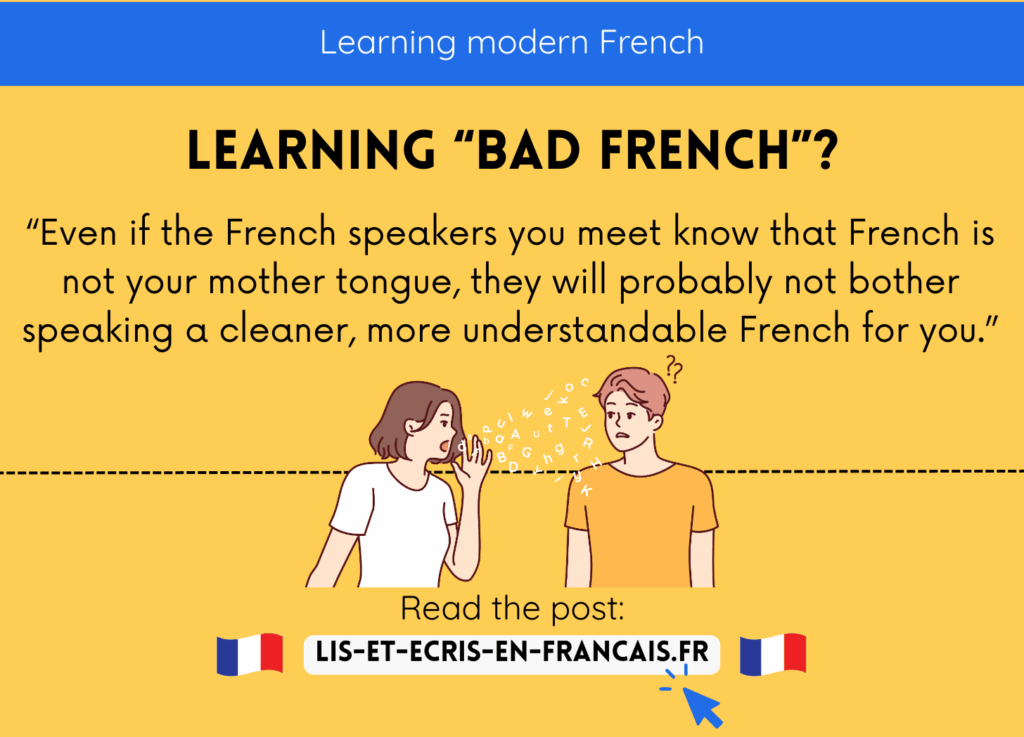
Most French speakers use this unofficial “everyday French”, with all its flaws, unconsciously. Even if French speakers you meet know that French is not your mother tongue, they will probably not change the way they’re speaking to make it easier for you. Even if they did, it would only solve the problem for one-on-one conversations, but you would still struggle to follow public discussions or broadcasts.
Not knowing the “real” French, spoken by most people, will also prevent you from speaking naturally: as people will notice that French is not your mother tongue, they can consider that you’re just a tourist. If your goal is to settle in a French speaking country (France, Belgium, Switzerland, Canada…), it can make it more difficult for you to be accepted and integrated in your new country. It sucks, but that’s the way it is…
At first, it’s important to understand the everyday language. If you’re using those expressions before you understood them correctly, you might make mistakes or overuse some expressions, which would make it as bad as sticking to textbook French.
How comprehensible input and authentic contents help you communicate with French speakers
Comprehensible input allows you to practice immersion by listening to podcasts and songs, reading books or articles, watching movies, shows or vlogs, in French.
This way, you discover words and expressions that you would never learn in classerooms or textbooks, you get used to them and recognize their natural context, and you can practice reusing them (by journaling, speaking aloud or discussing).
You’ll get better results using French original content rather than translated or dubbed content. By listening to or reading authentic content, you’ll naturally add new words and expressions to your everyday sentences, without having to study them. It takes time, so better start as soon as possible!
A few examples of medias to read or listen to for natural, modern French
- Substack – It’s a website where anyone can write their own media in a newsletter format. You can find articles about any topic and in different styles. You can check my own publication where I post a free story weekly in natural comprehensible French, or check this post to know how to find French publications on Substack about what you like.
- Blogs – Blogs are online personal diaries (although a lot of them got a bit more “professional”) generally on a particular topic. You find them by making a search about your topics of interest, with French keywords*.
- Forums – Unfortunately, it’s not easy to find discussions in French on websites like Reddit or Quora, but there are still independent forums out there. If you have a passion for a topic, you can just search for it using French keywords and the word “forum”.
- Social networks – Facebook (even though you think it’s hasbeen, it’s still the place where people have most public discussions online), Instagram… any platform where people can post text and/or videos.
- Youtube and Spotify – For audio content with caption (and visuals on Youtube). You can also find content about anything and in different language styles. In another article, I explained how to get French speaking videos recommendations automatically.
- Fiction and fanfiction websites – Those platforms allow anyone to post their own fiction stories. There are even platforms for illustrated (comics, manga) formats. I gave a few examples in my article about finding French ebooks online for free.
- Television – Look for shows where “common” people get to talk, like reality shows (Top Chef, Pékin Express, Koh Lanta, Mariés au premier regard, Star Academy, La France a un incroyable talent, The Voice…) or where common people are interviewed (non scripted discussions). Same goes for radio shows.
- TV shows and movies – If watching original French content**, you’ll hear a lot of everyday expressions. Translated contents will always use a cleaner French than authentic French contents.
- Some comics, manga and novels – Those with a story about everyday topics have a higher chance of using natural language. Look for example for slice-of-life (in French, we often call this “feel good“…), or modern romances. I can recommend the novel The Arsenic Club (which is a French novel) where there are many discussions between teenagers in oral but also written contexts (social networks and private messages). It uses a very colloquial language. This Reddit discussion has several slice-of-life manga recommendations that are easy to read in French.
- Conversations – When you get the opportunity, discuss with French tourists you meet in your country, or make friends who speak French, or practice conversations with a tutor (but be precise about your goal and ask them to use a natural language; some teachers have a hard time doing so and prefer to stick to the rules, so choose wisely).
*To especially find blogs, add the word to your search terms. For example, if you wish to find blogs about the baguette (“:” is not mandatory):

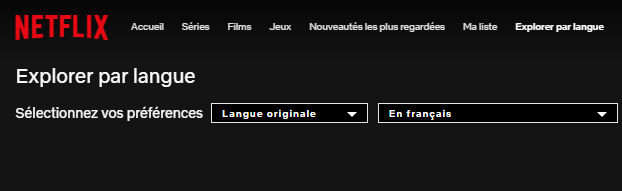
**On Netflix (the web browser version), you can filter the catalog to find titles in French original version, or dubbed in French or subtitled in French. I personally liked the French show “Plan Coeur” (at least the first seasons) and characters use a modern and colloquial language. But most importantly, you should watch stuff that you like!
Receive a free story in natural modern French every week in your mailbox
Or read this French comprehensible input book: