As a native French speaker, I really like crossword puzzles and other word games. I’ve been thinking about the use of such games by French learners: would crossword puzzles be a good way to learn new words or memorize known vocabulary, could it help with conjugation… ?
I’m convinced that games are a great support for learning French, or any foreign language, by having fun and without studying by heart: I’ve already talked about this regarding video games. However, I realized that the way French crossword puzzles are made doesn’t make it easy for French learners to use them.
In this post, I explain everything that’s specifically difficult in French crossword puzzles and similar word games when French is not your mother tongue.
- Puns in French crossword puzzles
- French cultural references in crossword puzzles (geography, history, religion…)
- Words that are not in use anymore, or not used by most people
- Accents and other signs cannot be relied on
- Some verb endings can correspond to different conjugation tenses or pronouns
- Mixing colloquial and formal languages
- Ambiguous definitions in crossword puzzles
- In summary: should you do crossword puzzles to learn French?
- More posts about learning French with games
- Websites to test crossword puzzles in French for free
Puns in French crossword puzzles
One big issue is that definitions in French crossword puzzles often use puns or play on words, making use of those French words with many different meanings, or playing with words that sound the same. I’ll share a few examples below.
I’m a native French speaker with a very good vocabulary and grammar level, and I write and read a lot, but even so I often think that those puns are farfetched and sometimes struggle to even understand them. It takes a very good knowledge of the language to be able to solve those riddles.
A few examples of farfetched French crossword puns
Definition: “poulet faisandé”, answer: “ripou”
“Poulet faisandé” means something like “aged chicken” or “matured chicken” (the term “faisander” doesn’t literally translate into English).
However, there’s a figurative meaning to “faisandé” which is “corrupt”, although I’ve never heard of it used in that context personally…
Then, “poulet” is of course the well-known bird and the meat we get from it, but in colloquial speech, it’s also a way to call a cop (although it’s kind of an insult, so we don’t use that word in front of police officers…).
So, in French, a “corrupt cop” is called a “ripou“.
It’s not easy to solve as the words “poulet faisandé” do make sense even without figurative speech, and the seconde meaning of “faisandé” is definitely not something you’d hear in the day-to-day.
Definition: “fait du vieux avec du neuf” (lit. “does something new with something old”), answer: “nonagénaire” (“nonagenarian”, someone who’s between 90 and 99 years old)
“Faire du vieux avec du neuf” could be understood literally as “to do something new with something old (or used)”, and there are plenty words in French to express that idea: “recycler” (to recycle), “customiser” (to customize/upcycle), “renouveler” (to renew), “transformer” (to transform)…
However, “neuf” can be translated to new, unused, but also to the number nine: they both have the same spelling. And that’s what the pun is about: we would believe that “neuf” means new, because of the context, while it actually means “9”. So, you’re supposed to guess that the answer is “a person who’s 90+ years old”, because “vieux” is a colloquial way to call an old person, and there’s the number 9, indicating that old person has a nine in their age…
In my opinion it’s a really bad one, as the initial sentence doesn’t make sense when you combine it with the answer.
Definition: “première émission”, answer: “areu”
“émission” (broadcast or emission) usually refers to a TV or radio program (e.g. “Les Marseillais” est une émission de téléréalité; une émission d’investigation…), but it can also mean “the production of a sound” (e.g. émettre un signal sonore, émettre une opinion…).
In this case, “première émission” is to be understood as “the very first sound that a human being makes, as a baby”, which is “areu” (it’s an onomatopoeia representing the sound of a baby cooing and babbling, before they can use words, which seems to translate to “goo-goo” or “ga-ga” in English).
French cultural references in crossword puzzles (geography, history, religion…)
Another recurring problem for people who are not living in France is the amount of cultural references. Even I, as a Belgian French speaker, living in a country right next to France, find it difficult and annoying as I do not know all rivers, region names, local dishes… of France. Some goes for their history. It even goes as far as asking for radio channel names, or acronyms related to administrative procedures or taxes.
Catholic religion related words are also occurring quite often, which can be a problem for atheists or people with other believes or religions.
I ended up learning those words by heart over time, but as a non-native speaker and beginner is French crossword puzzles, it can be an obstacle.
A few examples of cultural references in French crossword
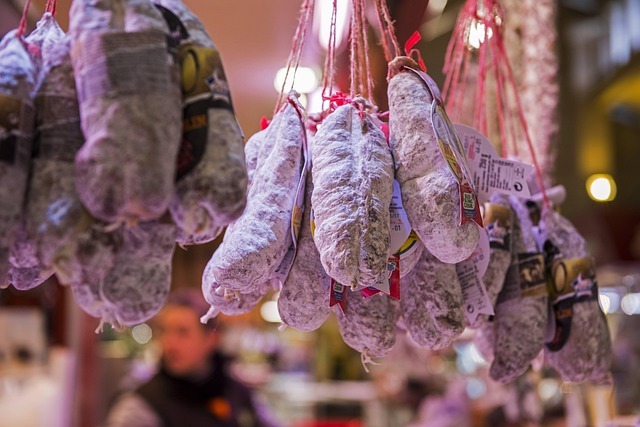
Definition: “Jésus à Lyon”, answer: “saucisson”
The “Jésus de Lyon” is the name of a variety of dried sausage.
Definition: “Ville du 47”, answer: “Nerac”
The number 47 represents the French department of Lot-et-Garonne, and Nerac is a city in that department.
Definition: “ancienne Citroën”, answer: “DS”
The “DS” is a car model from the French car brand Citroën…
Definition: “impôt sur le salaire” (lit. tax on the income), answer: “CSG”
“CSG” stands for “Contribution Spéciale Généralisée”, which is a tax on the income in France.
Words that are not in use anymore, or not used by most people
French crossword puzzles have been using the same words again and again for ages, really slowly introducing more recent vocabulary and dropping obsolete words (I’ve barely seen a difference since I was a child and started doing crossword, more than 20 years ago…). You have to guess a lot of words that are not useful on the daily, that you might never hear or read in real life, or that were used ages ago. Here’s a random example:
Definition : “harnacha le baudet”, answer “bata” (lit. harnessed the donkey; I couldn’t find a direct translation to “bâter” in English)
Other short but useless words are often used to fill in small gaps, like ire (an ancient word that means anger, rage), ut (an old name for the musical note “do”), fi (onomatopoeia expressing disgust, that I’ve never ever heard or read anywhere except in crossword puzzles), peuh (exact same than “fi”), ure (ancient type of beef)…
Accents and other signs cannot be relied on
In French crossword, a letter can be considered with an accent in one direction, and not in another direction. Concretely, if the answer vertically requires an É, that same letter in the horizontal solution could be either É, È, Ê, Ë, or simply E. Same goes with Ç and C, and so on.
This means you shouldn’t write accents and similar signs in the grid, and as a result, you won’t be able to deduct whether a word needs an accent or not.
Some verb endings can correspond to different conjugation tenses or pronouns
French crossword puzzles do use a lot of conjugated verbs, which leads to one more difficulty: since they’re not given with their personal pronoun (except in some beginner level grids), you sometimes don’t know how they’re supposed to be conjugated, because they same spelling could correspond to different tenses or pronouns (or both…). Here’s an example:
Définition: “bus en entier” (lit. drunk in full), answer: “vidai”
First, “bus” could be the noun of the public transportation mean… But considering we know it’s a verb, it can actually be three different conjugations of “boire” (to drink):
- past simple, first singular: je bus
- past simple, second singular: tu bus
- past participle, masculine plural: bu -> bus (example: les verres ont tous été bus, lit. glasses have all been drunk)
Even if you guessed that the answer was a conjugated form of the verb “vider” (to empty), there’s no way to know which one it is until you cross other letters in the grid, because all possible answers are 5-letter words:
- vidai (past simple, first singular): je vidai
- vidas (past simple, second singular): tu vidas
- vidés (past participle, masculine plural): les verres ont été vidés
There are many cases where a conjugated verb has the exact same spelling with several conjugation tenses and/or personal pronouns, while the synonym verb conjugates in a different way.
Mixing colloquial and formal languages
In French crossword, you’ll find a variety of language levels, including formal or literary usages, day-to-day language, slang, vulgar expressions…
The risk is that you’d learn some words and expressions and not use them in the right situation or context if you didn’t double check their appropriate usage.
Ambiguous definitions in crossword puzzles
Finally, I’ve also noticed that definitions do not always follow the same logic from one grid to another, or even inside the same grid. For example, you usually look for synonyms in crossword, but sometimes the expected answer is a variation of the given word or expression.
Definition: “nage” (swim), answer: “papillon” (butterfly)
In this case, the answer is not a synonym of “nage” (the fact of swimming), but a kind of swimming stroke or style that is called “papillon” (lit. butterfly).
In summary: should you do crossword puzzles to learn French?
As we’ve seen, crossword and other word games in French are not very learner-friendly for several reasons:
- they require you to be able to understand puns and plays on words, to play with words that have several definitions, or different words that sound the same…,
- you need to be able to recognize that a conjugated verb can correspond to different tenses or personal pronouns, and find the corresponding conjugated forms for other verb groups,
- they mix different kind of languages, from very formal speech to slang.
In addition, a good knowledge of French culture, geography and history is necessary.
💡Beginner level crosswords are way more accessible and allow French learners to train recognizing basic conjugations, navigating nouns-adjectives-adverbs-verbs with the same root, and learn often used synonyms.
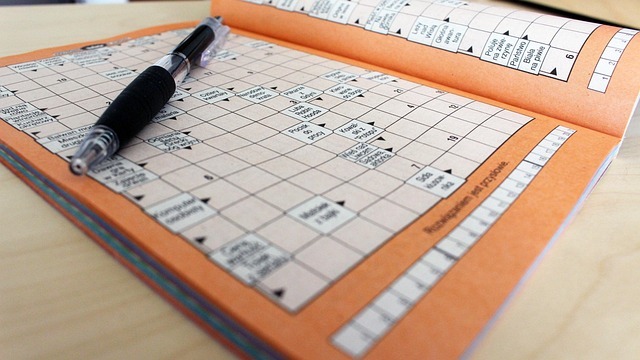
Here are a few examples of level 1 puzzles (these are from the publisher Mégastar). Definitions are simple, answers make sense without knowledge of figurative speech, and vocabulary is useful in everyday life. I think level 2 from the same publisher is still accessible to French learners.
- definition: “faire du tricot”, answer: “tricoter”
- definition: “cessa, stoppa”, answer: “arrêta”
- definition: “le contraire de crédit”, answer: “débit” (lit. the contrary of credit -> debit)
- definition: “difficulté cachée”, answer: “piège” (lit. hidden difficulty -> trap)
Beyond beginner level, French crossword puzzles are very demanding and require either to train a lot, or to get a better language level.
The short answer, in my opinion, is that crossword is really not friendly for non-native French speakers, but the best way to know if it’s for you is to give it a try anyway.
One last tip, I think “mots fléchés” kind of grids are easier than “mots croisés”.
More posts about learning French with games
- How to learn French with video games
- Video games recommendations with oral and/or written dialogs French
Websites to test crossword puzzles in French for free
If you want to give it a try, here are some websites with free grids in French
Have you ever tried French crossword or other word games in order to improve your vocabulary?